


What is the Community Commission for Public Safety and Accountability?
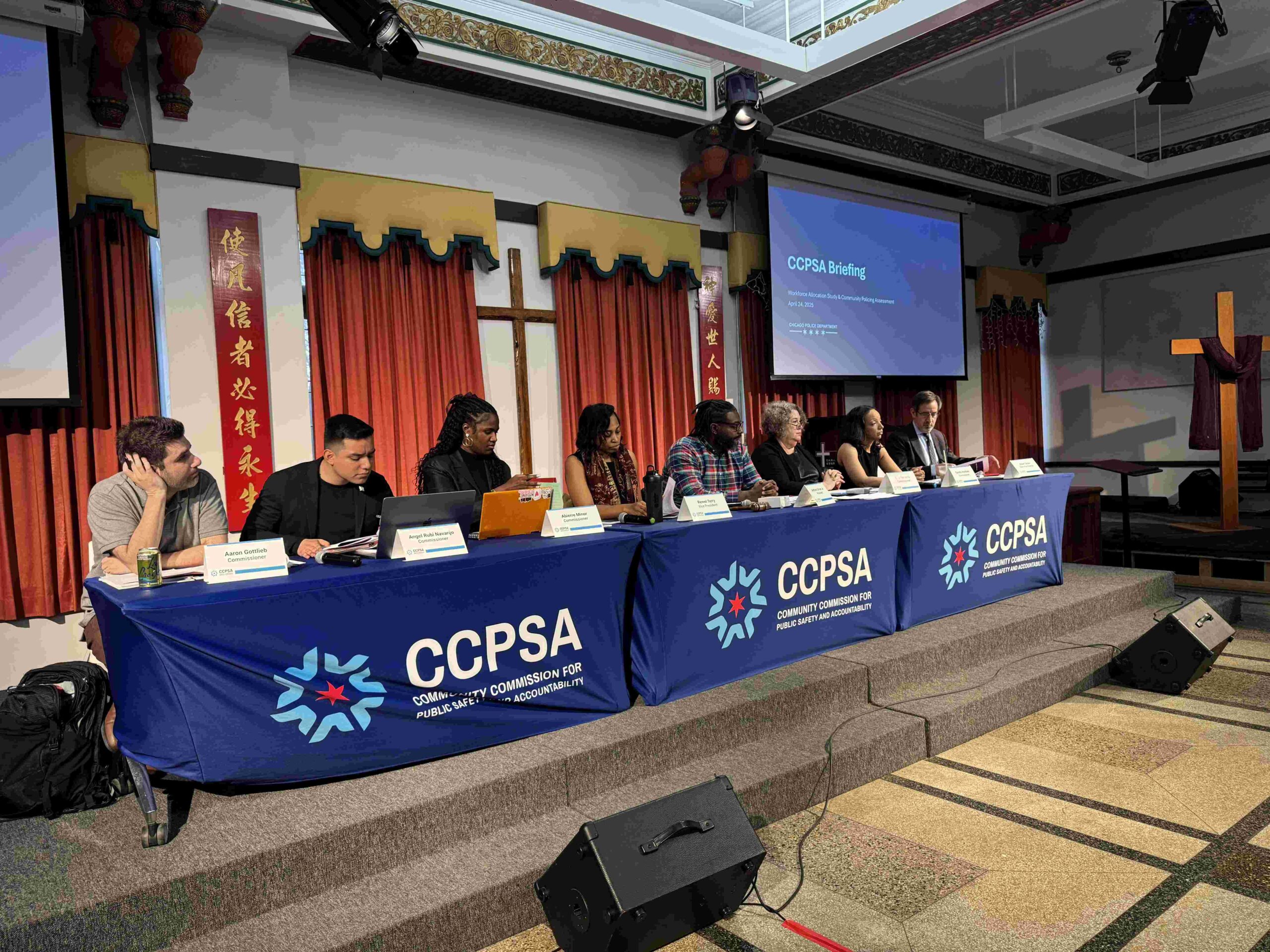
The Community Commission for Public Safety and Accountability is an independent, seven-member civilian body that oversees the Chicago Police Department (CPD), the Civilian Office of Police Accountability (COPA), and the Police Board.
Commissioners are nominated through the District Council Nominating Committee and appointed by the Mayor. Terms are staggered, with members randomly selected to serve two- or four- year terms. The current Commission was appointed in May 2024.
The Commission is designed to reflect the diversity of the entire city. Its members include representatives from the North, South, and West Sides, as well as two youth Commissioners. Each Commissioner must meet qualifications outlined in the ordinance, ensuring they bring independence, integrity, and a demonstrated commitment to public safety and police accountability.
The Commission’s mission is to strengthen accountability, build trust between police and communities, give Chicagoans a meaningful voice in oversight, and advance effective, community-centered approaches to public safety.


What range of powers does the Commission have?
- When there is an opening for Police Superintendent or a member of the Police Board, the Commission will develop a short list of candidates. The Mayor must choose from the Commission’s list or request a new list. Once the Mayor makes a selection, the City Council will vote whether to confirm.
- The Mayor has sole authority to remove the Police Superintendent and Police Board members. But if the Commission believes that one of those officials is not fit to do the job, the Commission can hold hearings and take a vote of no confidence in the official. That would trigger a City Council hearing and vote and a public response from the Mayor.
- The Commission will select the COPA Chief Administrator, subject to City Council confirmation. The Commission, with City Council approval, can also remove the COPA Chief for cause.
- Click here to review the Commission’s Police Board Member Selection Procedures, last adopted August 31, 2023
- Click here to review the Commission’s COPA Chief Selection Procedures, last adopted July 27, 2023
- Both the Police Department and the Commission can draft Police Department General Orders, but General Orders don’t become policy without a majority vote of the Commission.
- Where there is disagreement about policy between the Police Department and the Commission, there is a process to build consensus and seek to resolve all differences.
- Ultimately, the Commission may vote on any policy that is before it.
- The Mayor may veto a Commission-enacted policy. The City Council may override a mayoral veto by a 2/3 vote.
- The Commission cannot set policies covered by the Police Department Consent Decree.
- The Commission will gather public input on policies, including by posting draft policies on its website and offering the public opportunities to comment.
- The Commission plays the same role as described above in setting policy for COPA and the Police Board.
- At the beginning of each year, the Commission will set goals for the Superintendent and the Police Department, the Chief Administrator and COPA, and the Police Board President and the Police Board.
- At the end of each year, the Commission will evaluate the progress that was made toward meeting the established goals.
- Before the City Council votes on the annual City budget, the Commission must review and may recommend changes to the proposed Police Department budget appropriation.
- The Commission will hold public meetings at least once a month.
- The Commission will conduct outreach to get a range of perspectives on police-community relations, Police Department policies and practices, and the police accountability system.
- The Commission will appoint a Noncitizen Advisory Council to ensure that the perspectives and experiences of Chicago residents who are not United States citizens are reflected and incorporated in the Commission’s work.
- The Commission can require the Police Superintendent and other key officials to provide data and reports, and to appear in public forums to address questions.
- The Commission may publish public reports on matters of community concern.